


PTD-DBM: what this peptide is and what has actually been shown
The active in the professional HAIRREGEON line. We look at how the mechanism is described, what patents and publications cover, and what stays outside the evidence.
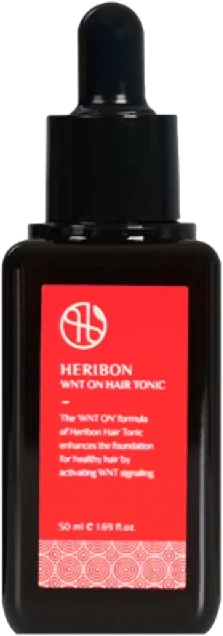
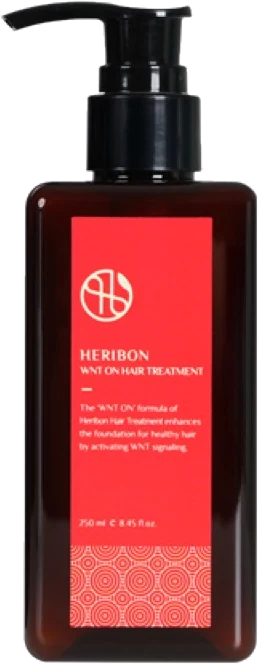
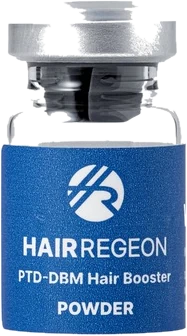
When a factory names an active, a buyer has two separate questions. First: what does this substance do. Second, and far more important for purchasing: what supports that claim, and how closely does the support relate to the product you will actually sell. We use PTD-DBM as the example, the active in the professional HAIRREGEON line from the Korean company CK Regeon.
What the peptide does
According to the company, PTD-DBM acts through a protein called CXXC5. The company describes this protein as a factor that suppresses the Wnt signalling pathway in the scalp, and links that pathway to hair growth. The peptide binds competitively to CXXC5, and the suppression is lifted.
In the professional line the peptide does not work alone. It is paired with MetaAct, an activator of the enzyme PKM2. The company describes the pair like this: one component releases the brake, the other strengthens the signal itself. For a buyer this means you cannot judge the formulation by one name on the label. The pair works together, and half of it cannot be substituted.

What has actually been shown
The technology has two different kinds of support, and it helps not to blur them. The first is patents: five registered, in the USA, the European Union, Korea and China, covering the WNT Hair composition and the peptide itself. A patent confirms novelty and authorship of a composition. It does not confirm that a finished product works.
The second is publications. The competitive binding of CXXC5 is described in peer-reviewed journals, among them the Journal of Investigative Dermatology. A publication confirms that the mechanism has been studied and accepted after review. That is considerably more than a marketing brochure, and it is still evidence for a mechanism, not for a result on the shelf.
What the evidence does not cover
Between «the mechanism is described in a journal» and «the product delivers a result for the customer» lies a distance that only clinical testing of the specific product at the specific concentration can close. That is exactly what to ask about: was the finished product tested, how many participants, how many weeks, and what was measured.
The regulatory side deserves separate attention. In most countries claims about hair growth and hair loss are restricted by law, and the permitted wording on the label depends on the market. The formulation can be identical while what you are allowed to print on the pack in Brazil, the European Union and Korea differs.
What to ask the supplier
At least four things. The concentration of the peptide in the finished product, not in the raw material. The supply format: HAIRREGEON comes as two vials, 200 mg of powder and 5 ml of diluent, and that format means mixing before use, which brings its own storage requirements and staff training. Test protocols for this exact product. And the list of claims the company is prepared to support with documents for your market.
If the answer to any of these is «that is a trade secret», it is not a reason to walk away from the supplier. It is a reason to record the gap in your comparison table and price it in.