


KY19382: how a professional active is carried into a home line
The active in the HERIBON home line. We look at how a home formula differs from a treatment-room one, and why the same name on the label does not mean the same product.

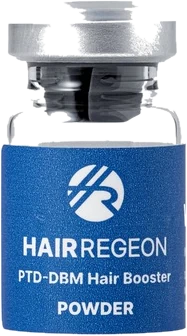
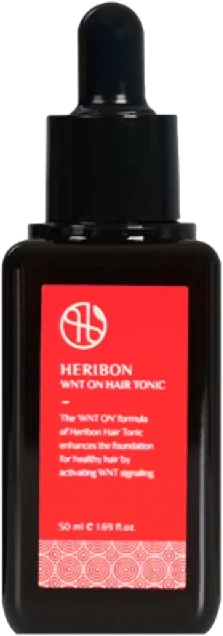
A factory rarely sells the same formulation into the treatment room and onto the shelf. A professional treatment is performed by a specialist once every few weeks, while a home product is applied by the customer daily. Those are different conditions, and the formulations differ accordingly. We use KY19382 as the example, the active in the HERIBON WNT ON home line from the Korean company CK Regeon.
How the home formula differs
The professional HAIRREGEON line runs on the peptide PTD-DBM paired with MetaAct, and it ships as two vials: powder and diluent, mixed just before the treatment. That format exists precisely because the composition is not stable once prepared and is designed for a short window after mixing.
The home line is built on KY19382. The company describes it as a component acting on the same signalling pathway but suitable for a stable finished form: a 500 ml shampoo, a 300 ml scaler, a 250 ml treatment mask and a 50 ml leave-in tonic. A home product has to survive a warehouse, a shipment and six months in a bathroom, and that constraint shapes the formulation as much as the active does.

Why the same name is not the same product
Buyers often read an ingredient list as a checklist: if the name matches, the product must match. In practice a matching name tells you the substance is present, but not how much of it there is, nor whether it reaches where it should. A shampoo is rinsed off within a minute; a tonic stays on the scalp until the next wash. At the same concentration those are two products with different meanings.
The second thing a name hides is the delivery form. The same substance can go into the water phase, into an emulsion, or be enclosed in a carrier, and stability and cost follow from that choice. The question is not «does it contain KY19382» but «how much and in what form».
What this changes for purchasing
A four-step line sells differently from a single product. The average basket is larger and repeat purchase is more predictable, but the first order is heavier: you have to bring in all four items, or the shelf looks unfinished and there is nothing to recommend as the next step.
Turnover deserves a separate calculation. A 50 ml tonic is used up more slowly than a 500 ml shampoo, so there is no reason to order them in equal quantities. Agree the ratio with the factory in advance, based on their data from other markets, rather than levelling the order by item count.
What to ask the supplier
The active concentration for each of the four items separately. Stability data: how many months and at what temperature. Irritation testing — for a product that stays on the scalp this is a required document, not a nice extra. And the list of claims permitted for your market: wording about hair loss is regulated almost everywhere.
If the factory offers to adapt the formulation for your market, clarify whether the active concentration changes with it. Adapting to local rules often means exactly that reduction, and it is better to know before launch than after the first reviews.